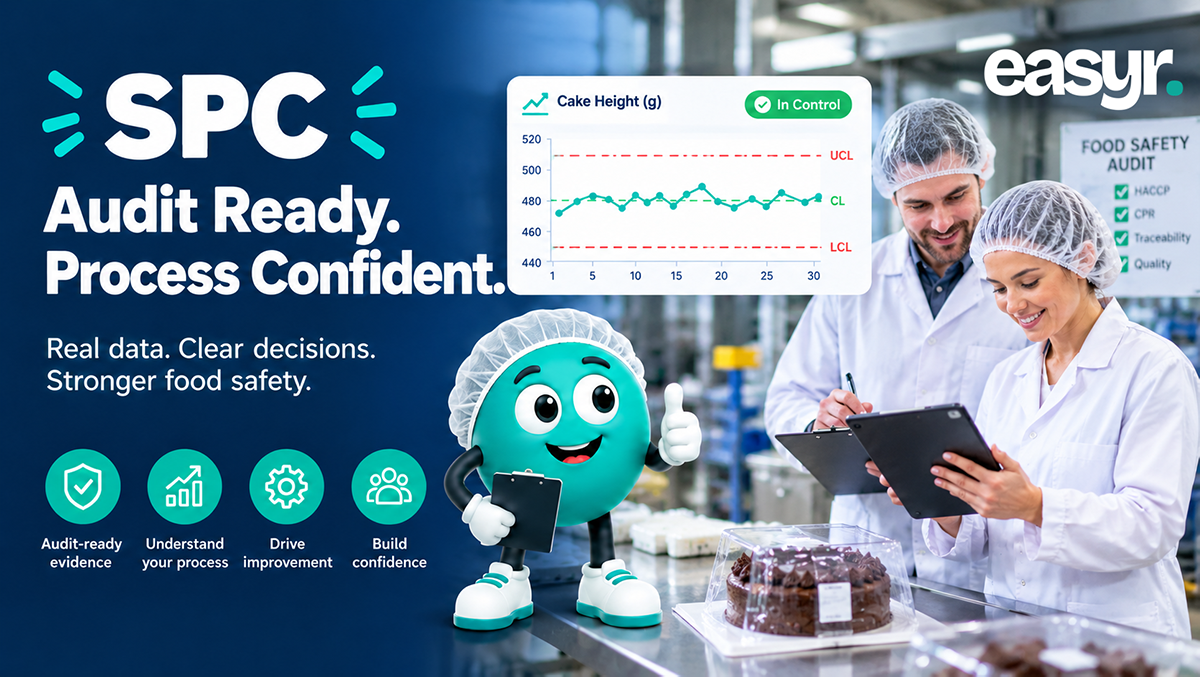
I've sat through a lot of food safety audits, and I've watched auditors work through their checklists. There's a moment in almost every audit when they ask the question: How do you know your process is under control? The answer matters more than you might think. It's the difference between an auditor nodding and checking a box versus digging deeper and finding compliance issues.
Here's what auditors actually want: proof that you're not just following procedures, but genuinely managing your processes. They want to see that you understand what's happening in your operation. SPC gives you exactly that. It's like the difference between having a rulebook and actually understanding the game.
- Auditors want proof you understand your process, not just that you follow a procedure.
- They look for evidence: charts, documented decisions, and operators who can explain what they're watching.
- SPC data gives you all of that in one place.
They Want to See Systematic Understanding
 When an auditor asks how you know your process is in control, they're not looking for a quick answer. They want to see evidence. They want to see that you've thought this through. SPC provides exactly that kind of evidence.
You've got:
- Control charts showing your process over time
- Data that shows what normal looks like
- Documentation of what action you take when things go out of control
This isn't luck - this is systematic understanding. Auditors love that because it shows you're not just hoping everything's okay.
Most auditors have seen hundreds of food operations. They can tell the difference between a company that's genuinely in control of their processes and a company that's lucky so far. When they see SPC data, they see genuine control. They see a company that knows what they're doing.
They're Looking for Continuous Improvement
Auditors know that compliance is table stakes. Everyone's supposed to follow the rules. What separates good companies from great ones is continuous improvement. SPC is a continuous improvement tool. It helps you identify issues before they become problems. It helps you understand your processes deeply enough to actually make them better.
When an auditor sees SPC data being used properly, they see a company that's genuinely trying to improve. Not just checking boxes, but actually thinking about process performance. That makes a huge difference in the tone of an audit. You're not defensive. You're not worried about what they might find. You're proud of what your data shows.
They Want Traceability of Decisions
One of the things auditors really dig into is decision making. When you had a quality issue, what did you do? How did you decide whether a batch was safe? How did you determine the scope of a recall investigation? With SPC data, you can show your decision-making process. You can point to the data that supported your decisions.
This is way more credible than saying we just knew something was wrong. You can say:
“Our SPC data showed these measurements here, which compared to our control limits meant we needed to investigate.”
Auditors respect that because it's objective and documented. It shows professionalism and discipline.
They're Checking for Operator Knowledge
 Here's something that surprises a lot of people: auditors often talk to your operators directly. They want to know if your team actually understands what they're doing. With SPC in place, your operators can explain what they're monitoring and why. They can read a control chart. They understand what normal looks like and what signals a problem.
This is huge for audit outcomes. When an auditor talks to operators and they clearly understand the processes they're running, it builds confidence. It shows that your SPC system isn't just paperwork - it's actually integrated into how your team works. That operators understand why measurement matters. That management cares enough to train them.
They're Looking for Risk Management
Modern food safety audits focus heavily on risk management. How do you identify risks? How do you manage them? How do you make sure controls are effective? SPC fits perfectly into this framework. It's a risk management tool. You're monitoring the critical aspects of your process and catching problems early.
When you show SPC data to an auditor, you're demonstrating a sophisticated approach to risk management. You're not just hoping everything's okay - you're actively verifying it with data. You've got systems in place to catch deviations before they become safety issues. That's the whole point of risk management.
They Want to See Your Response to Data
Auditors care not just that you collect data, but that you act on it. When something goes out of control, do you investigate? When you see a trend, do you address it? Or do you just create charts and ignore what they're telling you? They want evidence that your SPC system is alive and being used.
They'll ask you about recent out-of-control points:
- What happened?
- What did you investigate?
- What did you find?
- What did you do about it?
If you can answer those questions confidently and point to actual actions you took, they're satisfied. You've got an active, working system.
The Bottom Line for Audits
 Implementing SPC doesn't guarantee you'll pass an audit, but it absolutely puts you in a better position. You've got:
- Data
- Systematic understanding
- Evidence of continuous improvement
- A team that understands what they're doing
That's the kind of company auditors feel good about passing. And more importantly, that's the kind of company that's actually producing safe food consistently. The audit success is just the logical consequence of having your processes truly under control.

Make the next audit a conversation, not a scramble
Easyr keeps your charts and records tidy and in one place, so you can answer the auditor's questions with real data. Have a chat with us and we'll show you how it works.
Get in touch